Last updated November 17, 2026
DIY vs Professional ADU: The Henderson Homeowner’s Decision Guide
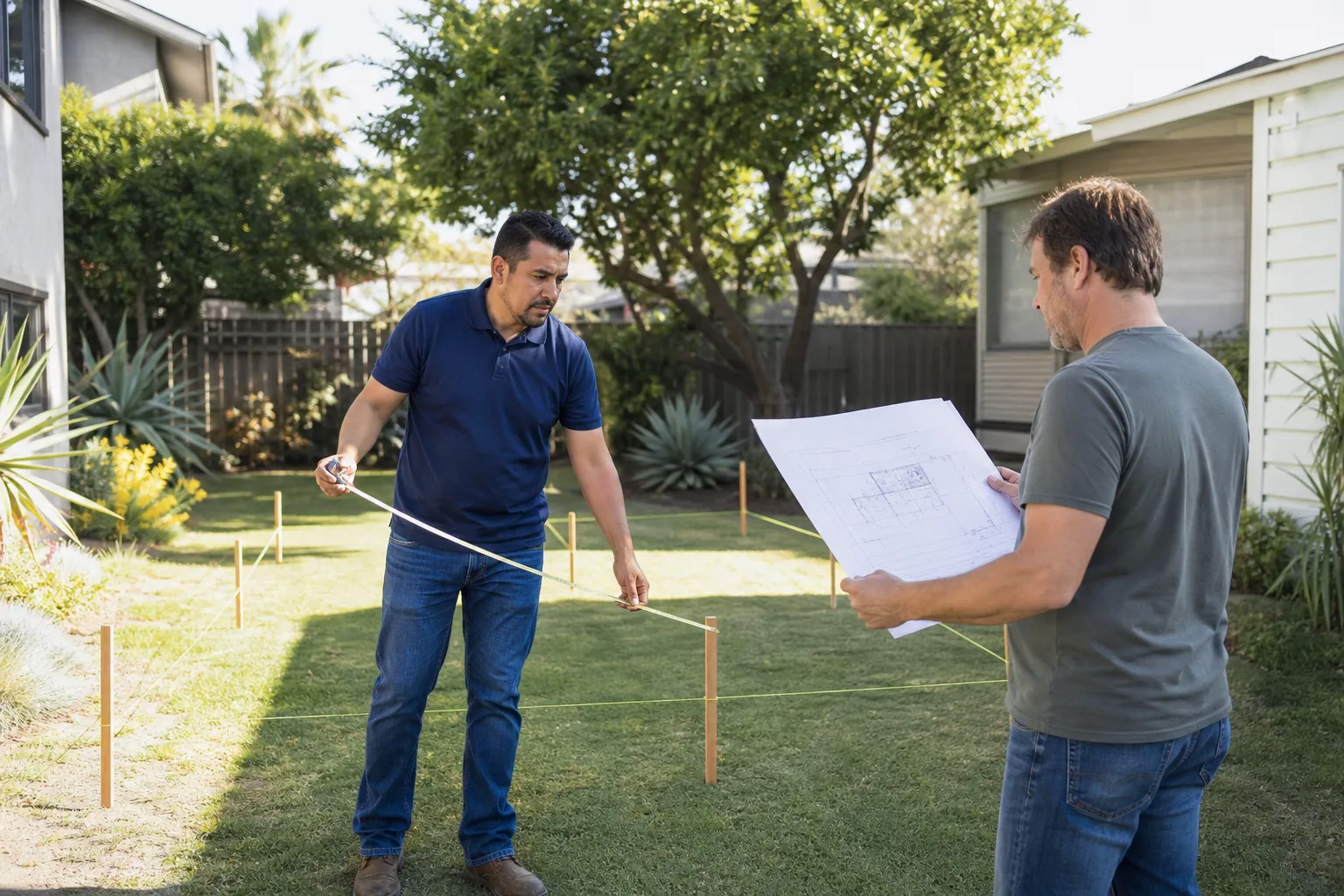
Most DIY-friendly ADU content stops at tools and lumber. That misses the real fork in the road. In Henderson, the DIY-versus-hire decision is about permit authority before it’s about skill. Nevada’s owner-builder exemption lets a homeowner pull their own permit, but the City of Henderson’s application asks you to certify the structure will be your primary residence. Build under that certificate, then rent the ADU, and you’ve made a sworn statement to the city that can resurface at resale, refinance or a code complaint. This guide covers what the exemption actually says, which trades you can’t legally touch, where genuine DIY scope lives, and how the timelines compare on a Henderson lot.
Quick Answer
In Henderson, DIY on an ADU is legally viable only if you’ll occupy the unit as your primary residence and you leave electrical, plumbing and HVAC to Nevada-licensed trades. If the ADU is for rental income, the owner-builder route doesn’t apply, and hiring a licensed ADU builder is the compliant path. For most Henderson homeowners building a rentable unit, a professional build is the only route that holds up at permit, at insurance and at resale.
Table of Contents
- What Nevada’s Owner-Builder Exemption Actually Says
- What Henderson’s Application Makes You Certify
- The Three Trades Nevada Requires to Be Licensed, No Exceptions
- Where Genuine DIY Scope Exists on a Henderson ADU
- The Warranty and Insurance Gap When You Are the Builder
- Real Project Timelines: Licensed Contractor vs Owner-Managed
- What an ADU Costs in Henderson in 2026
- The Decision Framework: When DIY Makes Sense and When It Doesn’t
What Nevada’s Owner-Builder Exemption Actually Says
Nevada’s contractor licensing law (NRS 624) requires anyone who constructs or improves a building for others to hold a contractor’s license. The exemption carved out for owner-builders is narrow on purpose. It allows a property owner to act as their own contractor on a structure intended for their own use and occupancy, not for sale and not for rent. The state’s contractor board has consistently read “own use” as residence, not investment.
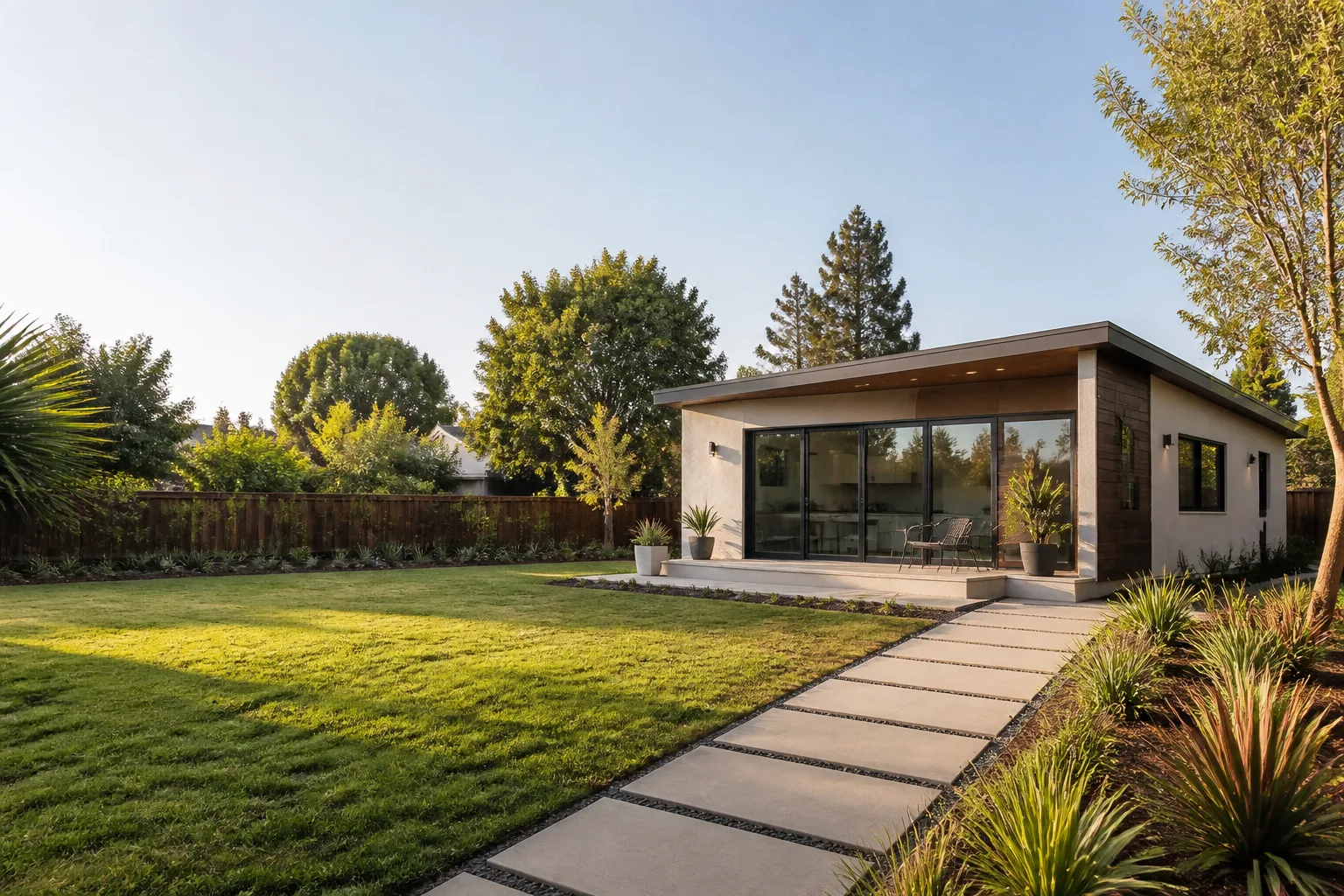
That distinction matters in Henderson because so many ADUs are built with rental intent. A detached unit in Green Valley or a garage conversion in Macdonald Ranch that’s going to be leased out is not “own use” under any reasonable reading of the exemption. The permit may get approved because the application captured a certification, not because the city verified your intent. The gap between what you signed and what you do with the unit is the exposure.
Three things the exemption does not give you:
- Relief from licensed-trade requirements. Electrical, plumbing and HVAC still need licensed contractors. The owner-builder exemption covers general construction scope only.
- Relief from code compliance. Every inspection on the sheet still happens. The city doesn’t relax structural, energy or life-safety requirements because you’re the applicant.
- Relief from disclosure. When you sell a Henderson property with an owner-built ADU, the buyer’s agent will ask who built it. A misrepresented owner-builder permit shows up in the permit history.
For homeowners researching ADU options, the honest starting point is reading the exemption carefully, then asking what use the unit will actually serve before deciding who pulls the permit. Our ADU builders in Henderson team walks that decision through with every homeowner we meet.
What Henderson’s Application Makes You Certify
Henderson’s building permit application for residential accessory structures includes an owner-builder certification. When you sign as owner-builder, you’re certifying that you will personally supervise the work, that the structure is for your own use, and that you will occupy it as your primary residence. Read that last clause twice. It’s a specific statement, and it’s sworn.
Here’s where it bites. Say you build a detached 600-square-foot ADU in Calico Ridge under an owner-builder permit, then rent it to a tenant within 18 months. The city doesn’t come knocking on day one. But three things can surface:
- A code complaint from a neighbor triggers a records check, and the certification is right there in the permit file.
- A refinance or sale requires disclosure of owner-builder status on the seller’s real property disclosure form, and the buyer’s lender will order a permit history.
- An insurance claim on a fire or water loss where the adjuster discovers the unit was built under an owner-builder permit but is being used as rental income.
The certification is the hinge point, and most DIY content never mentions it. That’s not because the content is malicious; it’s because the writers are focused on skill, and this issue is about paperwork. If you want to build a rentable unit, you need a licensed builder to pull the permit. That’s the clean answer, and it’s the one we give Henderson homeowners when they ask.
The Three Trades Nevada Requires to Be Licensed, No Exceptions
This is where DIY content gets dangerously simple. An owner-builder exemption does not extend to electrical, plumbing or HVAC. Nevada requires licensed contractors in each of those trades on any residential project, including owner-builder projects. You cannot DIY the wiring, the water, or the heating and cooling. Period.
Why: those trades are the ones most likely to kill someone or destroy a structure if done wrong. A swapped neutral in a subpanel can start a fire inside a wall cavity. A gas line that isn’t tested and purged can leak. A mini-split wired on a circuit sized for a window unit will overheat at the breaker. The state doesn’t want to argue with you about whether you watched a video. It just requires the license.
What this means for the DIY pitch:
- You must hire and pay three separate licensed trades – electrician, plumber, HVAC contractor. That eliminates a big chunk of the “save money” argument people think they’re making.
- Those trades pull their own permits under their own license numbers and get their own inspections. You’re not just coordinating; you’re carrying three separate inspection schedules and three separate final signoffs.
- You own the interface risk. If the electrician roughs in the subpanel and the HVAC contractor needs a disconnect in a different spot, that’s your problem to reconcile, not theirs.
If you’re converting a garage in Lake Las Vegas or a detached structure in Seven Hills, the licensed-trade requirement is unavoidable. Roughly a third of the work on a typical Henderson ADU sits behind that wall. Our garage conversion contractor in Henderson team coordinates those trades every week, and it’s where owner-managed projects lose the most time.
Where Genuine DIY Scope Exists on a Henderson ADU
Here’s the honest part: there is real DIY scope on a Henderson ADU. It just doesn’t live where social media says it does. The high-value, low-risk work sits in finish-out, and it’s the work most homeowners can do well with reasonable effort.
Genuine DIY-friendly work on a Henderson ADU:
- Interior paint and primer – walls, trim and ceilings. Low risk, high visual return, and no inspection.
- Cabinet installation on a kitchenette – if you’re comfortable with a level and a stud finder, prefab cabinets from a big-box or a Plant Prefab package are within reach.
- Flooring on a slab – luxury vinyl plank and laminate go down fast on a properly prepped slab, and Henderson’s dry climate means you don’t fight humidity issues the way coastal ADU builders do.
- Landscaping and hardscape trim – paths, planters, gravel and drip irrigation. Not water line; drip zones tapped off an existing hose bib are usually within landscape scope, not plumbing permit scope. Confirm with the plumber on your project.
- Fencing and gates – as long as fence height stays within Henderson’s residential limits and you aren’t blocking an easement.
- Finishing touches – closet systems, shelving, trim-out, blinds, light fixture swaps on existing circuits (not new circuits).
Where DIY is not fine, even if neighbors do it: anything that penetrates the building envelope on a structural wall, anything on a new electric circuit, anything connected to water or gas, and anything that changes a load-bearing wall. Garage conversions in Henderson often need a structural retrofit for the existing door header; that’s not a homeowner job. Our room addition contractor in Henderson team handles those structural upgrades on additions where the header, footing or slab has to change.
The Warranty and Insurance Gap When You Are the Builder
When a homeowner builds their own ADU, they lose two safety nets at once, and neither one is easy to see until something fails. The first is the warranty. A licensed builder’s written guarantee, like the 365-Day Done Right Promise we put on every project, means a defect comes back to the builder at no charge. An owner-builder has no such backstop. When the mini-split condenser fails eight months after you install it, you call the manufacturer for a part and you reframe it yourself.
The second is the homeowner’s insurance policy. Standard HO-3 policies typically include coverage for the primary dwelling and attached structures, but detached ADUs often need a specific endorsement, and a structure built by an unlicensed owner-builder can be excluded at claim time. Some Henderson carriers will issue the endorsement; others will ask for the permit and the contractor of record before they’ll add the structure. If the answer is “owner-builder,” the underwriting conversation gets harder. Talk to your carrier before you break ground, either way.
The disclosure piece at resale matters as much. Henderson buyers are careful about ADUs because they’re now shaping rental income and appraisal values. An owner-built ADU with a certification showing owner-occupancy but a tenant of record tells its own story. A licensed build with a clean permit history and a written guarantee doesn’t have to.
Real Project Timelines: Licensed Contractor vs Owner-Managed
Timeline is where the owner-managed model looks cheaper on paper and rarely is. The difference isn’t labor speed, it’s queue management. A licensed contractor with a permit expediter knows the Henderson permit pipeline and files paperwork that doesn’t bounce. An owner-builder files cold, and every rejection restarts the clock.
Typical timelines for a Henderson ADU (detached 600-750 sq ft, standard lot):
| Phase | Licensed Contractor Build | Owner-Managed Subcontractor Build |
|---|---|---|
| Design and structural | 4-6 weeks (with an ADU-experienced designer) | 6-10 weeks (first-time owner navigating requirements) |
| Henderson permit review | 5-9 weeks, single submittal, typical | 8-14 weeks, common plan-check resubmittals |
| Licensed-trade scheduling | Already on the calendar before permit is issued | 1-3 weeks between each trade, plus interface gaps |
| Construction | 14-20 weeks | 18-30 weeks, weather and trade sequencing dependent |
| Final inspection and CO | 2-3 weeks, one point of contact | 3-6 weeks if punch list requires trade callbacks |
| Total, typical | ~9-12 months | ~12-18 months |
Those are working ranges from what we see across Henderson neighborhoods, not sales-desk numbers. The owner-managed timeline absorbs the schedule risk you didn’t budget for: a plumbing rough-in that fails inspection because the subpanel placement conflicts, a plan-check correction you have to interpret without a code background, a framing inspection that sends you back to the truss engineer. Each of those costs two to three weeks. Those are facts most DIY guides leave off the page.
What an ADU Costs in Henderson in 2026
Dollar ranges help homeowners self-qualify before they pick a route. These are working ranges for Henderson-area ADU projects, before landscaping and site work. They’re based on current material pricing and trade rates in the Las Vegas valley, not national averages.
| Project Type | Typical Range (2026) |
|---|---|
| Garage conversion (existing structure, new interior, kitchenette, bath) | $75,000 – $140,000 |
| Prefab detached ADU (Boxabl, Plant Prefab, Mighty Buildings package) | $120,000 – $260,000, plus site work |
| Conventional detached ADU (600-750 sq ft, site-built) | $210,000 – $340,000 |
| Room addition (single room with bath, attached) | $95,000 – $220,000 |
| Site work and utilities (utility trench, slab, connections) | $18,000 – $45,000 depending on distance from main |
| Permit and plan-check fees (Henderson, typical) | $4,000 – $9,000 |
Where the DIY route saves money: the finish-out scope above, maybe $8,000 – $20,000 on a typical ADU. Where it doesn’t save and actually costs: owner-managed schedule slippage, permit resubmittals, and renegotiated trade pricing when you can’t guarantee volume. The clean number is what a licensed team puts in writing on day one, and that’s a Garrison Standard practice we hold to on every Henderson job.
The Decision Framework: When DIY Makes Sense and When It Doesn’t
Here’s the short version of the decision most Henderson homeowners land on, once the legal picture is clear.
- Will the ADU be rented, now or later? If yes, the owner-builder route is not the compliant one. Hire a licensed builder.
- Will it be your primary residence for the foreseeable future? If yes, the owner-builder route remains legal, but you still must contract licensed electrical, plumbing and HVAC trades.
- Do you have 12-18 months available to manage a three-trade coordination, a Henderson plan-check cycle and a punch list, on top of your day job? If not, an owner-managed build isn’t the “cheaper” option, it’s the slower one.
- Do you need a warranty to cover you? A licensed build carries a written guarantee. A self-build doesn’t. If a defect inside the first year would be a financial problem, hire out.
- Are you comfortable taking on the interface risk between trades, and the resale disclosure risk? If either gives you pause, hire out.
DIY on an ADU in Henderson is not a skill question. It’s an authority question, and the answer depends on occupancy and rental intent. Get that part right first, and the rest falls into place.
Common Mistakes to Avoid
- Pulling an owner-builder permit with rental intent. The Henderson certification is a sworn statement about primary residence. Renting the finished unit converts a paperwork shortcut into a disclosure problem at resale.
- Believing the exemption covers the licensed trades. It doesn’t. Electrical, plumbing and HVAC require licensed contractors on every residential project in Nevada, including owner-builder work.
- Skipping the structural check on a garage conversion. In older Green Valley and Lake Las Vegas neighborhoods, garage door headers often need reinforcement to carry an ADU’s interior loads. Doing it later costs more.
- Assuming the homeowner’s policy automatically covers the new structure. Detached ADUs typically need an endorsement. Ask your carrier before framing starts, not after.
- Underestimating the Henderson permit queue. Plan-check resubmittals in Henderson commonly add two to three weeks each. A clean submittal from an experienced designer avoids most of those.
- Buying a prefab kit without verifying site work scope. Boxabl, Mighty Buildings and Plant Prefab packages don’t include utility trench, slab or connections. On a Henderson lot, that’s often $20,000-$40,000 the buyer didn’t budget.
- Managing three licensed trades without a schedule. Electricians, plumbers and HVAC contractors who aren’t on a coordinated calendar will show up in the wrong order, and the inspection failures are yours to absorb.
When to Call a Professional
Call a licensed ADU builder in Henderson when any of the following is true: the unit will be rented at any point; the project involves a garage conversion with a structural header retrofit; you’re building detached and need electrical, plumbing and HVAC coordinated; you want a written price before work starts and a written year-long guarantee behind it; or you need the project done inside a single permitting cycle instead of two. Those aren’t edge cases. In our experience, they describe most Henderson ADU projects. Fielding ADU Builders Henderson offers free estimates in Henderson, and our technicians have up to 20 years of experience coordinating prefab and conventional ADU builds. Call (855) 953-5331 to schedule yours.
Frequently Asked Questions
Yes, but only if the ADU will be your primary residence. Nevada’s owner-builder exemption in NRS 624 allows a property owner to act as their own contractor on a structure for their own use, not for sale and not for rent. Henderson’s application includes a certification to that effect, and it’s signed under penalty of misrepresentation. If you plan to rent the unit, hire a licensed builder to pull the permit.
No. Nevada requires a licensed electrical contractor on any residential electrical work, including on owner-builder projects. The same applies to plumbing and HVAC. You can perform general construction tasks under the owner-builder exemption, but the three licensed trades must be contracted out. Call (855) 953-5331 if you want a walk-through of which scope is DIY and which isn’t.
Garage conversions typically run $75,000-$140,000 before site work and finishes; conventional detached ADUs run $210,000-$340,000 for a 600-750 sq ft unit; prefab packages land in the $120,000-$260,000 range before site work and utility ties. Permit and plan-check fees in Henderson usually run $4,000-$9,000. Call (855) 953-5331 for a written line-item estimate on your specific lot – estimates are free.
A clean submittal typically clears Henderson plan check in five to nine weeks. Resubmittals add two to three weeks each, and first-time owner-builders commonly see two or three of them. Pairing the design with an ADU-experienced designer and a builder who files clean paperwork keeps the timeline inside one cycle. If timeline is the deciding factor, call (855) 953-5331 and we can walk through realistic dates for your neighborhood.
Often not without a specific endorsement. Detached structures usually sit outside standard HO-3 coverage until an endorsement is added, and some carriers underwrite harder on owner-built structures than on licensed-builder builds. Call your carrier before you break ground and ask two questions: does the policy cover a detached ADU, and will it cover one built under an owner-builder permit. Those two answers usually settle the DIY question on their own.
Hire a licensed ADU builder and use a prefab or modular platform where the lot allows. Prefab options from Abodu, Mighty Buildings, Plant Prefab or Boxabl shorten site-build time, and a licensed builder handles the Henderson permit, licensed trades and the utility tie-ins inside a single permitting cycle. Call (855) 953-5331 for a free estimate and a realistic timeline for your lot.
The Bottom Line
The DIY-versus-hire question on a Henderson ADU comes down to three facts that most DIY content skips: Nevada’s owner-builder exemption doesn’t apply to rental units, electrical, plumbing and HVAC require licensed trades regardless of exemption, and homeowner’s insurance may exclude a self-built ADU. Where DIY genuinely works is finish-out, landscaping and cabinetry on an owner-occupied build. Everywhere else, the licensed route is faster, cleaner and holds up at resale. If your ADU is going to be rented or financed, hire a licensed builder. If it’s not, come get a free second opinion before you pick up a hammer.
Fielding ADU Builders Henderson holds every project to The Garrison Standard: a written price before work starts, background-checked and uniformed crews, permits pulled and inspections passed, and a 365-day guarantee on every build. We work with Abodu, Cover, Dvele, Mighty Buildings, Boxabl and Plant Prefab, and our technicians have up to 20 years of experience on Henderson ADU and addition projects. Call (855) 953-5331 for a free estimate, and we’ll put your project on paper before anything moves.
Written by the team at Fielding ADU Builders Henderson.