Last updated November 17, 2026
Room Addition Contractor Troubleshooting: Common Problems and How to Fix Them
A hairline crack running at 45 degrees from a door corner is not settling. It is differential movement, and in Henderson’s expansive caliche soil it usually means the footing detail was wrong from day one. That crack is the cheapest warning you will ever get, and most homeowners paint over it. This guide shows you how to read the early signals in a new addition, the ones that show up as a sticky door, a breaker that trips when the hallway light comes on, or a floor that gives slightly underfoot six months after move-in. Catching those signals early in Henderson keeps a $400 repair from becoming a $14,000 one.
Quick Answer
Most room addition problems in Henderson trace to four failures: wrong footing detail on expansive soil, undersized HVAC ductwork, a shoddy tie-in where the new roof meets the old, and missing or skipped permits. Fixes typically run $400 to $2,500 if caught in the first year, and $8,000 or more once structural movement or water damage sets in. The single best protection is a written one-year guarantee from a contractor who will come back and fix the defect at no charge.
Table of Contents
- How do you tell a settling crack from a structural crack?
- Why does Henderson’s soil cause addition problems?
- Why is the new room always too hot or too cold?
- Where does water get in at the roof tie-in?
- What should you do in the first 24 hours after finding a defect?
- How do you check the permit was actually pulled?
- How does a written one-year guarantee change your leverage?
How Do You Tell a Settling Crack From a Structural Crack?
Cosmetic cracks are thin (under 1/16 inch), run vertically or follow a drywall seam, and don’t move. Structural cracks widen over time, run at a diagonal, and show up near corners of doors and windows where stress concentrates. The difference matters because one needs paint and the other needs an engineer.
Photograph these patterns and keep a dated log. Tape a penny next to the crack so you can see if it grows between photos.
- Diagonal cracks at 45 degrees radiating from the top or bottom corners of a door or window: differential settlement, often footing-related.
- Stair-step cracks in exterior stucco or brick: movement along the foundation, common on the west side of Henderson where soil moisture swings more.
- Horizontal cracks in a foundation wall: pressure from soil or water; treat this as urgent.
- Doors and windows that stick only in summer: thermal movement or slight footing shift; watch it, don’t panic.
- Doors that won’t close at all within the first year: get an engineer’s eyes on it.
Any crack wider than a nickel, or one that grows month over month, warrants a structural engineer’s inspection, typically $400 to $800 in the Henderson market. Show them your photo log. When you’re weighing a repair against a rebuild, our room addition contractor in Henderson team can walk the site with you.
Why Does Henderson’s Soil Cause Addition Problems?
Henderson sits on caliche, a calcium-carbonate hardpan that swells and shrinks with moisture changes. When a footing is designed for standard soil rather than expansive caliche, the new addition moves differently than the original house. That’s the definition of differential movement: two parts of the same structure settling at different rates, tearing at the joint between them.
The telltale signs show up at the seam where old meets new. Watch for:
- A crack running vertically along the line where the addition attaches to the original exterior wall.
- Gaps opening at the baseboard or the ceiling line on the addition side.
- A floor that slopes away from the original house by more than 1/4 inch over 10 feet.
- Doors in the transition zone that stick while doors in the original house swing free.
Some soil movement is normal in Henderson and a properly detailed footing accommodates it. The fix for genuine differential movement is usually underpinning or a helical pier, and cost runs $1,200 to $2,500 per pier with three to six piers typical for a small addition. This is why a licensed engineer’s report matters before anyone starts pouring concrete. If you’re still in the planning stage, read our guide to ADU builders in Henderson for how foundation design gets handled on new builds.
Why Is the New Room Always Too Hot or Too Cold?
In our experience, HVAC underperformance in a new addition traces to duct sizing math, not the equipment. A contractor who “tacked on” a supply run from the existing system often used a duct too small for the room’s square footage, or tapped into a trunk that was already at its limit. The result: weak airflow, a room that runs 6 to 10 degrees off the rest of the house, and a compressor that works harder than it should.
Here’s how to diagnose it yourself in five minutes:
- Hold a tissue over the supply register. If it barely flutters, airflow is the culprit, not the thermostat.
- Compare register airflow in the addition with a register in the original house. The addition should feel comparable.
- Check the return air path. Many additions have a supply but no return, which starves the room of circulation.
- Read the delta: measure room temp with a cheap thermometer in the addition and in the main house at the same time of day. More than 4 degrees difference points to duct issues.
- Look at the equipment tag: if the system’s tonnage was sized for the original house only, the addition was never in the load calculation.
A manual J load calculation and a duct redesign typically run $600 to $1,200 in Henderson. A mini-split dedicated to the addition is often cheaper at $3,500 to $6,500 installed and gives you independent control. Either way, get the fix in writing before summer. Henderson’s 100-degree afternoons turn a 6-degree difference into a room nobody uses.
Where Does Water Get In at the Roof Tie-In?
The tie-in between new and existing roof is the single most common moisture intrusion point in Henderson additions. It’s where two roof planes, two flashing systems, and two different construction teams meet. When it fails, you don’t see a waterfall. You see a faint brown ring on the ceiling of the addition a week after the first monsoon rain.
Check these spots the first time it rains after construction:
- The valley where the new roof meets the old. Water should shed cleanly to the gutter with no pooling.
- The step flashing along the sidewall of the addition. It should be woven into the shingles, not surface-caulked.
- The ceiling drywall in the addition, especially in the corner nearest the old roof. Look for rings, discoloration, or soft spots.
- The attic or crawl space in the transition zone. Brown staining on rafters means water has been getting in for a while.
- Exterior stucco at the roofline. Cracks opening within the first year suggest the flashing wasn’t integrated properly.
Henderson’s monsoon season (roughly July through September) is when these failures surface, but the defect was set at construction. A proper fix involves removing shingles at the tie-in, installing new step flashing and a water barrier, and re-flashing the whole joint. Budget $800 to $2,000 for the repair. Catch it in the first year and it’s a warranty call, not a repair bill.
What Should You Do in the First 24 Hours After Finding a Defect?
The sequence of phone calls matters, and most homeowners get it wrong. Your first call goes to the contractor, not the insurance company and not an attorney. Here’s why, and how to structure those first 24 hours.
- Document everything before you touch anything. Photos with timestamps, a short written note of what you observed and when, and any measurements (crack width, room temperature, floor slope). This is your evidence.
- Call the contractor in writing. Email and text, not just a phone call. State the issue, include the photos, and ask for a site visit within a specific window (five business days is reasonable). A contractor with a written guarantee should respond promptly.
- Do not repair it yourself or hire someone else first. Modifying the work can void both the contractor’s guarantee and your ability to claim.
- Call your insurer only if water damage or a safety hazard is involved. Insurers want to know about active leaks; they don’t want to hear about cosmetic cracks. If there’s an active leak, mitigate (tarp, buckets) and document the mitigation.
- Call an attorney only if the contractor refuses to honor a written guarantee. That’s the last resort, and in our experience, most contractors with a real guarantee never force you there.
If your contractor is unreachable and the defect is structural or water-related, get an independent inspection. An engineer’s report at $400 to $800 is the document that drives everything else. Keep your records together in one folder (paper or digital). Our guide to garage conversion contractor in Henderson shows how a well-run project avoids these calls in the first place.
How Do You Check the Permit Was Actually Pulled?
In Henderson, room additions require a building permit, and the permit history is public. That’s your check against a contractor who promised to pull one and never did. An unpermitted addition is a real problem: it can complicate a sale, void insurance coverage, and force a costly retroactive permit process.
Here’s the check:
- Call the City of Henderson’s building department and ask for the permit history on your address.
- Confirm the permit was pulled before construction started, not after.
- Confirm the inspections passed: footing, framing, rough-in, and final.
- Ask for a copy of the final inspection record. Keep it with your home documents.
- If the permit was never pulled, hire a permit expediter (typical cost $800 to $1,500 in Henderson) to get it legalized.
There’s no shortcut here. A contractor who tells you the permit “isn’t needed for a small addition” is telling you something about how they do business. For context on how a permitted project should look from day one, see Fielding ADU Builders Henderson home page. Our teams treat permits as non-negotiable on every job.
How Does a Written One-Year Guarantee Change Your Leverage?
A handshake gets you a phone call that goes to voicemail. A written one-year guarantee gets you a site visit. That’s the practical difference, and it’s why we’ve built ours into every project. The Garrison Standard covers workmanship defects for 365 days; if something fails, we come back and make it right at no charge.
Here’s what to confirm before you sign anything on a room addition:
- It’s in writing. A verbal promise isn’t a guarantee.
- It names what’s covered and what isn’t. Cosmetic wear and tear is different from structural failure.
- It names a response window. “We’ll get to it” is not a commitment.
- It includes a free return visit. If the work fails inside the year, the contractor comes back at no charge.
- It survives a change of ownership. Good ones do, which helps if you sell within the year.
We work with prefab and modular platforms like Cover and Dvele on ADU projects where the manufacturer’s warranty has to mesh with the builder’s – two layers of written protection, not one. The cost difference between a contractor with a written guarantee and one without is usually zero. The difference in how quickly your defect gets fixed is enormous. Get a free estimate in writing from our room addition team in Henderson and see the guarantee before you commit.
Common Mistakes to Avoid
- Painting over a diagonal crack. A hairline crack in the first year that runs at 45 degrees from a door corner is differential movement; documenting it, not hiding it, is what protects you.
- Accepting a verbal price and a verbal schedule. In Henderson, the price that goes in writing on day one is the price that should land on your final invoice. Anyone who won’t put it in writing is planning to move it.
- Skipping the permit check “because the contractor seemed honest.” The permit history is public and takes one phone call to the City of Henderson. Make it.
- Letting the HVAC contractor add a supply run without a load calculation. Duct sizing is math, not guesswork, and the addition will run hot for years if the math is skipped.
- Ignoring a ceiling ring after the first monsoon. A brown ring on the addition ceiling is a roof tie-in failure in progress; the flashing has likely been wrong since construction.
- Calling an attorney before calling the contractor. A contractor with a real guarantee wants to fix it; lead with a documented written request and give them the chance.
- Hiring whoever is cheapest in the Henderson market. The lowest bid is often the one that leaves the permit board blank and the guarantee unwritten.
When to Call a Professional
Call a professional when you see any of the following: a diagonal crack that widens over a few weeks, an active leak at the roof tie-in, a floor that visibly slopes in the addition, a breaker that trips only when the addition’s circuits are on, or a room temperature that swings more than 6 degrees from the rest of the house. Those signals point to structural, water, electrical, or HVAC defects that compound if left alone. A licensed engineer’s inspection, a duct redesign, or a roof flashing repair all start with a proper site visit. Fielding ADU Builders Henderson offers free estimates in Henderson, with the price in writing before any work begins. Call (855) 953-5331.
Frequently Asked Questions
Structural crack repair in Henderson typically runs $1,500 to $6,000 depending on the cause. Cosmetic cracks cost $150 to $400 to patch and repaint. Footing-related differential movement usually needs underpinning at $1,200 to $2,500 per pier. Call (855) 953-5331 for an exact quote after a site inspection; estimates are free.
No, if you hired a contractor who put the price in writing before any work began. Our written price goes to you before a nail is driven, and the number you approve on day one is the number on the final invoice. Call (855) 953-5331 to see a written estimate before you commit.
A brown ring after rain almost always means the roof tie-in flashing failed. That’s the joint where the new roof meets the existing one, and it’s the most common failure point in Henderson additions. Repair costs $800 to $2,000 if caught early. Call (855) 953-5331 to schedule a free inspection.
Yes. Every room addition and ADU we build is permitted by the book, and we confirm the inspections pass before we call the job done. If a prior contractor left you with an unpermitted addition, we can help sort out the fix. Call (855) 953-5331 for a free estimate.
Most repairs we handle take one to five days on-site, depending on whether a permit or an engineer’s report is required. Water-damage repairs are often longer because of drying time. Call (855) 953-5331 and we’ll quote a schedule with the price.
If you hired a contractor with a real written guarantee, yes. The Garrison Standard covers workmanship defects for 365 days, and if something fails, we come back and make it right at no charge. That’s the guarantee our team builds into every project. Call (855) 953-5331 for details.
The Bottom Line
The defects that cost $14,000 almost always announce themselves first as something you can fix for $400. Read the crack pattern. Check the supply airflow with a tissue. Watch the roof tie-in after the first monsoon. Write down what you find and keep the photos. The order of phone calls matters: contractor first, inspector second, insurer only if there’s water, attorney only if a written guarantee gets ignored. And the single strongest protection you can build in before construction starts is a contractor who hands you a written price up front and stands behind the work in writing for a full year.
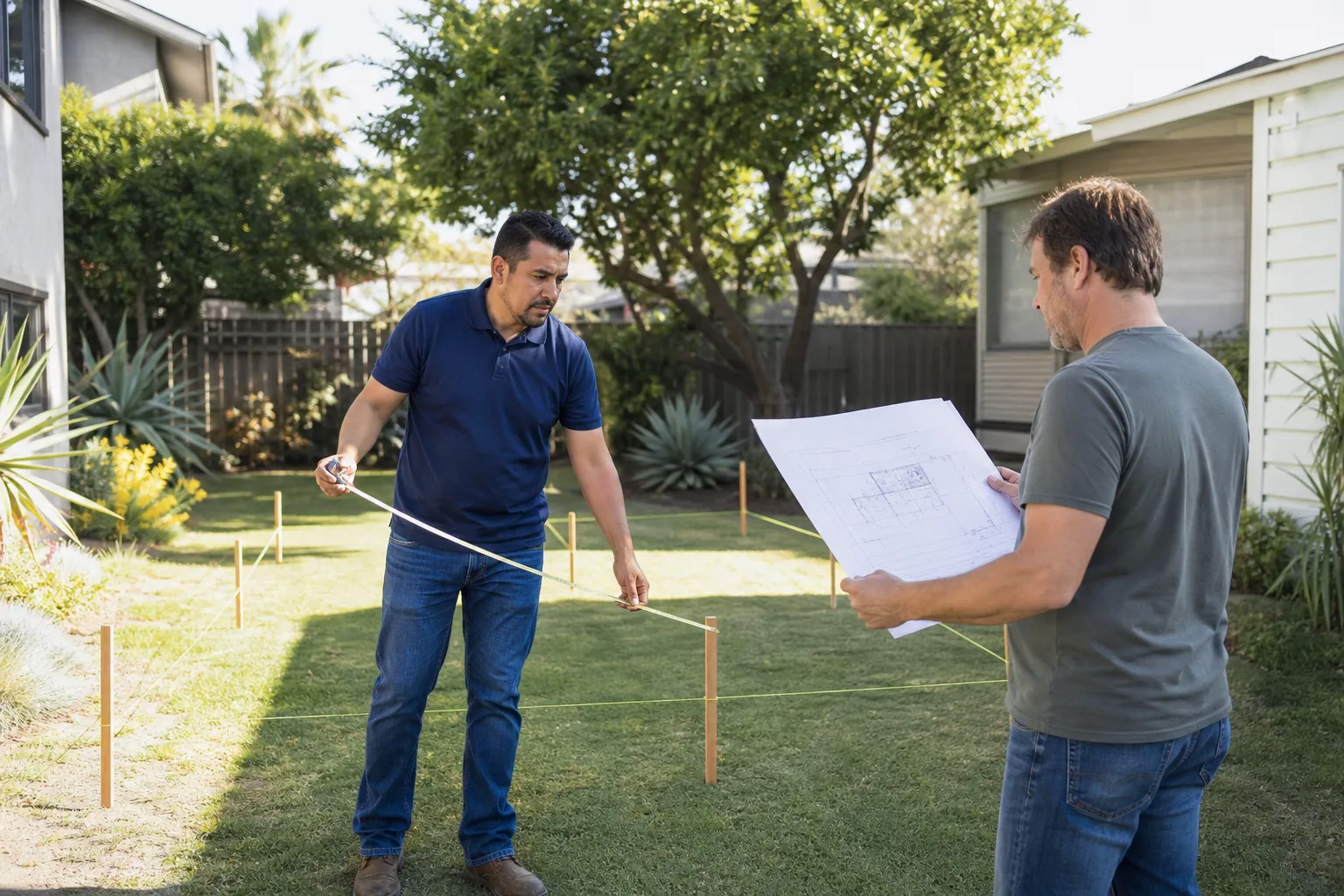
If you’re in Henderson and something in your addition doesn’t feel right, or you’re planning a build and want to start it on solid footing, call Fielding ADU Builders Henderson at (855) 953-5331 for a free estimate. We’ll walk the site, put the price in writing, and tell you plainly what you’re looking at.
Written by the team at Fielding ADU Builders Henderson.