Last updated November 17, 2026
Room Addition Contractor Maintenance Checklist for Henderson Homeowners
The most common call a Henderson contractor gets in year two isn’t a structural complaint. It’s a hairline crack at the seam where the addition meets the existing house – a crack that opened because nobody told the homeowner to check the caulk line before June. Henderson sits in one of the harshest finish-material climates in the country: 115-degree summers, hard ultraviolet exposure, and a monsoon season that drives rain sideways into every roofline joint. A room addition built to code still moves, dries, and shrinks through that cycle. This guide gives you the specific inspections to run at six months and twelve months after handover, the six seams where desert thermal swing causes early failure, and how to use your written guarantee before it expires.
Quick Answer
Run a room addition maintenance inspection at six months and again at twelve months after construction, focusing on the six transition seams where the new structure meets the existing house: roofline, foundation step, stucco joint, door threshold, soffit, and electrical penetrations. Before each monsoon season (June in Henderson), check flashing, weep screeds, and window head caulking. Photograph everything and present any defects to your contractor in writing before your one-year guarantee window closes.
Table of Contents
- The Six Seams Where Henderson Additions Fail First
- What to Inspect Before Monsoon Season
- How to Read Your Permit Inspection Card
- Concrete Slab and Expansion Joint Care on Caliche Soil
- The One-Year Guarantee Checkpoint: What to Document
- Your Henderson Maintenance Calendar
- Common Mistakes to Avoid
- When to Call a Professional
The Six Seams Where Henderson Additions Fail First
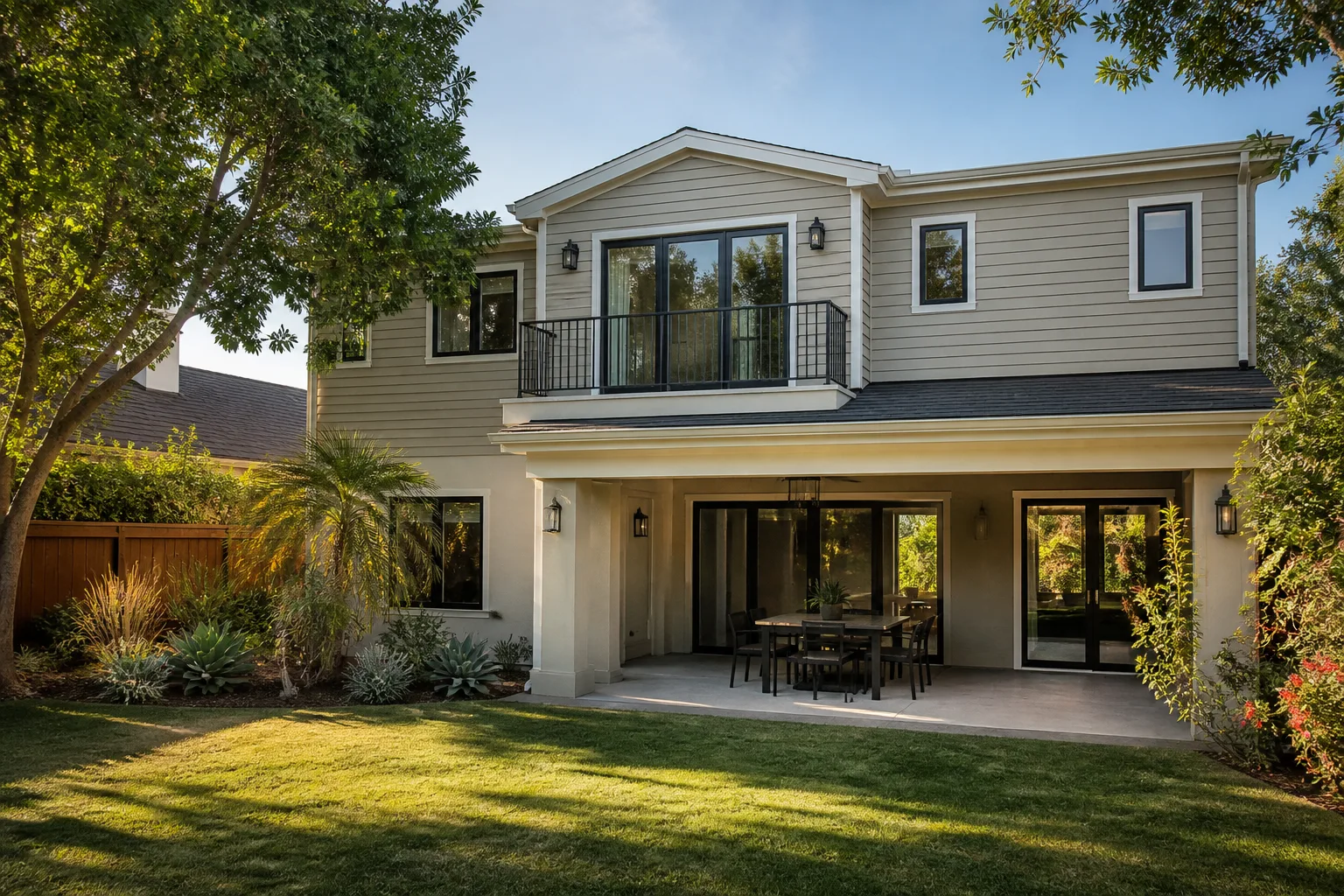
A room addition is two buildings bolted together. The existing house has already finished settling; the new wing is still drying out, shrinking, and finding its level. Every material in the new wing expands and contracts at a different rate than the material it abuts. In Henderson, that differential is pushed hard – a roof surface can swing 80 degrees between a July afternoon and a January night. These six seams take the load:
- Roofline transition. Where the new roof plane meets the old, the step flashing and counter-flashing carry the whole fight. This is the number one leak point on every addition, and monsoon rain hits it at an angle.
- Foundation step. The new slab or stem wall meets the existing footing. Look for a clean, uniform gap filled with backer rod and sealant – not a smear of caulk over dirt.
- Stucco joint. The control joint or sealant line between old and new stucco. Desert stucco is unforgiving: it cracks at rigid transitions before it cracks anywhere else.
- Door and window thresholds. The exterior door from the old house into the addition is a moisture entry point. Threshold sealant dries and splits faster in Henderson than almost anywhere.
- Soffit and fascia joint. Look for gaps where the new soffit panels meet the old fascia line. Bees and wind-driven dust get in first; water follows.
- Electrical and plumbing penetrations. Every exterior light, outlet, hose bib, and vent pipe that passes through the new wall has a sealant collar. Those collars are the quietest failure point on the building.
Walk all six with a flashlight and your phone camera at six months. Look for gaps wide enough to slide a business card into, discoloration, or chalky residue that signals sealant breakdown. Small sealant renewals are normal homeowner maintenance. A gap that keeps reopening after resealing is a contractor conversation, and that’s the kind of thing our Room Addition Contractor in Henderson team documents during warranty calls.
What to Inspect Before Monsoon Season
Henderson’s monsoon window typically runs July through September, but the prep window is May and early June. Once the first real storm cell parks over the valley, you’re inspecting for damage instead of preventing it. Desert construction has three features that only matter when rain arrives sideways:
- Roof flashing. Check every step and counter-flashing joint along the addition roofline. Sealant should be pliable and bonded, not cracked or pulling away. Look for rust streaks on the stucco below – that’s a slow leak leaving a trail.
- Weep screeds. The weep screed is the metal lip at the base of your stucco wall that lets trapped moisture drain out. It must sit at least 4 inches above finished grade and stay clear of dirt, mulch, and rock. Henderson landscaping crews bury them constantly.
- Window head caulking. The head is the top of the window frame, and it takes the rain first. In desert construction, sun cooks that caulk joint year-round. Run a finger along it: if it’s hard, cracked, or separated from the frame, it needs renewal before the first storm.
Also clear the scuppers and downspouts on the addition before June. A single blocked downspout on a flat or low-slope addition roof can back water under flashing in one storm. Do this check the same weekend you test your smoke detectors – a twice-a-year rhythm keeps it from being forgotten in Henderson’s dry spring months.
How to Read Your Permit Inspection Card
This is the part almost no homeowner knows to do – and it’s the gap that quietly transfers liability to you. Every permitted addition in Henderson carries an inspection record with the city. The card or online record shows each inspection scheduled, the date, the result, and the inspector’s name. What it doesn’t show is everything nobody scheduled.
- Request the inspection history. Ask your contractor for the permit number and pull the record yourself through the city’s online portal. Never rely on a verbal “it all passed.”
- Match inspections to construction stages. A typical addition runs foundation, framing, rough electrical, rough plumbing, insulation, and final. If the record skips framing or rough-in, that work was never verified.
- Look for “partial” or “correction required” results. Those are follow-up items. Confirm each one shows a later passing inspection.
- Check the final inspection date. No final means the project is technically open with the city – a problem when you sell.
- Keep a copy with your closing documents. In Henderson resale, an unclosed permit is a red flag a buyer’s agent will find.
If you inherited a project with gaps on the card, that’s not a crisis – it’s a known quantity you can fix. Before you contract any new work, review the ADU Builders in Henderson page on how we sequence permitted work, or start with the Fielding ADU Builders Henderson home page for how the written-price-first process works.
Concrete Slab and Expansion Joint Care on Caliche Soil
Much of Henderson sits on caliche – a cemented calcium-carbonate layer under the topsoil that holds water at the surface and moves unevenly when it does. Additions here are usually engineered with deeper footings to bridge it, but the slab and its expansion joints still need annual attention.
- Expansion joints. The fiber or foam joints cut into the new slab and along the seam to the existing driveway or patio are the slab’s relief valves. When they fill with dirt and rock, the joint can’t close when the concrete expands in summer heat – and the slab cracks somewhere it shouldn’t.
- Joint backer and sealant. On exterior joints, check that the sealant is still bonded to both sides of the joint. Cracked joint sealant lets water under the slab edge, and caliche soil doesn’t drain it away.
- Hairline cracks in the field of the slab. Fine cracks are normal curing behavior; wide cracks, step-offs, or cracks that reopen after patching are not.
- Drainage away from the addition. The finished grade along your new wall should slope away at minimum 2 percent – roughly a quarter inch per foot. Henderson’s hard, rocky soil holds water in low spots against the foundation.
One practical note for our Henderson customers: after a heavy monsoon storm is the best time to walk the slab edge. Water collects exactly where the grading reverses, and you can see it in five minutes.
The One-Year Guarantee Checkpoint: What to Document
Most homeowners never use their warranty because they never organized what to claim. A written guarantee is only as good as the evidence you bring to the conversation. Here’s how to prepare before the twelve-month window closes.
- Photograph every seam and defect. Re-shoot the same six seams from the six-month walk so you have before-and-after evidence of any change.
- Keep a dated log. Note when you first noticed each issue, what you did (resealed, ignored, called), and what happened next.
- Gather the paper trail. Your contract, final invoice, permit records, and any invoices for materials you used on minor repairs.
- Write a short cover letter. List each item, attach photos, and state that you are requesting correction under the written guarantee.
- Deliver it in writing. Email with read receipt or hand delivery with a signature. A phone call leaves no record.
- Schedule the walk before the deadline, not after. The last two weeks of the warranty year are the worst time to discover you need a contractor conversation.
Here’s the standard we hold ourselves to: The Garrison Standard covers workmanship defects for 365 days; if something fails, we come back and make it right at no charge. That guarantee is spelled out on paper before work starts, and it’s a written commitment on the front end, not a verbal promise after the fact. Whatever contractor built your addition, insist on the same.
Your Henderson Maintenance Calendar
Henderson’s climate divides cleanly into four maintenance windows. Put these on your phone calendar now:
- February: Reseal exterior caulk joints while temperatures are moderate. Sealant needs to cure without the 115-degree blast.
- April: Prime inspection window. Walk all six seams, check weep screeds and head caulking, clear the roof drains.
- June: Monsoon prep – final flashing check, downspout clearing, sun survey of the addition roofline for any new cracks.
- October: Post-monsoon inspection – walk the six seams, document anything new, and schedule any warranty items before the year turns over.
We schedule our own warranty inspections for additions in Henderson around these windows on purpose. In our experience, the failures we see result from timing, not poor work. Caulk that gets applied in July fails by September. If a homeowner asks up front “when should I check my addition?” we answer with the calendar, not a number of years. This is the same care we bring to a Garage Conversion Contractor in Henderson project, since garage conversions hit the same seam set with even tighter tolerances.
Common Mistakes to Avoid
- Ignoring hairline cracks at the seam because “it’s just cosmetic.” In Henderson, a hairline crack at the stucco joint is the first message. If it keeps reopening after resealing, moisture is moving behind it, and that’s a warranty item.
- Skipping the permit record review. Homeowners inherit open permits and uninspected framing all the time. Pull your own record before you close out the guarantee window, and ask the contractor to supply the permit number if you never saved it.
- Burying the weep screed under landscape rock. The most common self-inflicted damage in Henderson’s newer subdivisions: rock mulch sits 8 inches above where it should, so trapped stucco moisture has nowhere to drain.
- Waiting for the first monsoon to test flashing. By the time you’re watching water pool at the threshold, damage is under way. Check in April and June, not August.
- Resealing with the wrong product. Silicone doesn’t bond to cured silicone, and some caulks fail in the desert UV inside a season. Use a paint-over acrylic or polyurethane rated for high-temperature exterior use, and follow the label’s temperature range.
- Filing warranty claims verbally. A phone call with a contractor’s office isn’t a warranty request. Put it in writing and keep a copy – a written commitment deserves a written claim.
- Never photographing anything. Photographs from month six are the whole argument at month twelve. Without them, a claim looks like opinion.
When to Call a Professional
Some items on this checklist are homeowner-level work: resealing an exterior joint, clearing a downspout, photographing a seam. Others need a trained eye and a licensed contractor. Call for help when you see water staining or discoloration inside the addition after a storm, a stucco crack that reopens after two reseal attempts, a foundation step gap that widens noticeably between inspections, any suspected permit gap in the record, or a slab crack that offsets vertically. Don’t open up flashing or electrical penetrations yourself – the electrical side is a genuine shock hazard, and roof work on a steep-pitch addition in Henderson’s heat is a fall risk for anyone without the right equipment. Fielding ADU Builders Henderson offers free estimates in Henderson – call (855) 953-5331. We’ll walk the seams with you and tell you what’s maintenance and what’s warranty.
Frequently Asked Questions
Run your first full inspection at six months after handover, then again at twelve months before your guarantee window closes. The six-month mark catches the initial drying and settling cycle in a Henderson summer; the twelve-month mark is your deadline for documenting any warranty items. We recommend one additional check in April or June, ahead of monsoon season, on the flashing, weep screeds, and window head caulking.
Routine seam inspection and a small sealant renewal typically runs $150 – $400 in the Henderson market, and a warranty call on a project still under a written guarantee should cost you nothing. Larger repairs – resetting flashing, correcting a weep screed, or stucco patching at the transition – can run $600 – $1,800 depending on the seam and access. Call (855) 953-5331 for a specific number; estimates are free.
Yes, if flashing or head caulking is compromised. Monsoon rain hits the roofline seam at an angle that hides a small leak until it’s stained the interior drywall. The prep takes an hour – check head caulking along every window, confirm roof flashing is bonded, clear the downspouts, and make sure the weep screed is clear of rock and dirt. Do this in June, not during the first storm.
Pull the permit inspection record through the City of Henderson’s online portal using your permit number. The record lists each scheduled inspection, the result, the inspector, and the date. Match the entries against construction stages – foundation, framing, rough electrical, rough plumbing, insulation, final – and confirm no “correction required” result lacks a later passing inspection. If a stage is missing, you inherited a gap. Ask a licensed contractor to review it; a callback on a missed framing inspection requires design confirmation before you attempt anything.
Clearing debris from the joints and keeping them clean is homeowner work. Resealing exterior slab joints is a small job for many homeowners, but the sealant choice matters in this climate, and the wrong product cracks in one summer. If you’re unsure what’s in the joint now, have a contractor look at it – we reseal these as part of our post-handover warranty visits.
Yes, if the crack is a workmanship failure, such as poor flashing, missing backer, or a sealant applied outside its rated temperature range. Normal material curing and seasonal movement are not usually covered, but Henderson’s range – where the same seam moves inches over the year – means the judgment needs eyes on it. Submit your photographs and a short written request before the twelve-month mark and let the contractor assess. That’s what a written guarantee is for.
The Bottom Line
Your Henderson room addition will do its job for years if you run two inspections a year – April and October – and a third before monsoon season in June. Focus on the six seams, keep a photo log, pull your permit record, and present any defect to your contractor in writing before the one-year guarantee runs out. The work takes a couple of hours and saves the kind of crack that turns into a repair bill. If you’d like a knowledgeable walkthrough at any point, our crew is background-checked, arrives in uniform, and answers every call live. Call (855) 953-5331 for a free estimate in Henderson, and we’ll show you exactly where to look on your addition.
Written by the team at Fielding ADU Builders Henderson.