Last updated November 17, 2026
DIY vs Professional ADU Builders: What’s Safe to Do Yourself
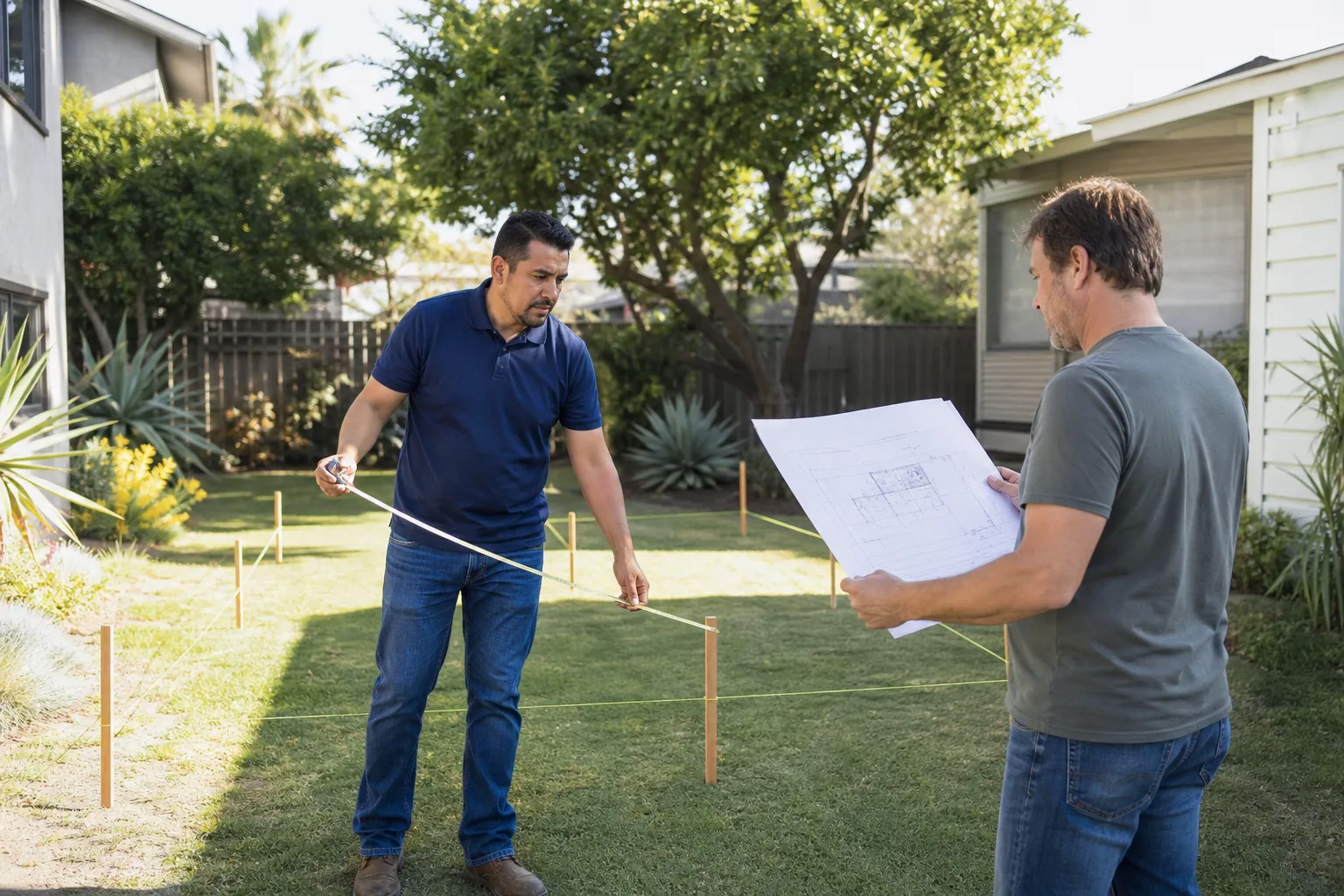
Nevada lets homeowners act as their own general contractor on the home they live in. That exemption is real, and plenty of Henderson homeowners have used it to save money on a garage conversion or a backyard ADU. But the exemption has limits, and ADU work sits right on top of several of them. Do the wrong part yourself and you can hand your homeowner’s insurance carrier a reason to deny a claim, or hand a future buyer a reason to walk. This guide draws the line at the permit, not at skill level. It explains what you can legally self-perform in Henderson, what you can’t, what you actually save on the safe side of the line, and what gets expensive when you cross it.
Quick Answer
The safe DIY work on an ADU is unpermitted finish and site work: demolition, painting, finish carpentry, landscaping, and cleanup. Anything that has to pass inspection – electrical, plumbing, HVAC, gas, and structural framing – must be performed by a licensed trade contractor in Nevada, even when you hold the owner-builder exemption. You can act as your own general contractor and still hire licensed subs; you cannot legally sign off on trades that require a license.
Table of Contents
- What Nevada’s owner-builder exemption actually covers
- The work that always needs a licensed trade contractor
- Why the permit is the real dividing line
- What you can legitimately self-perform and what it saves
- An honest cost comparison: savings vs. risk
- Insurance and resale consequences of uninspected work
- Henderson-specific considerations: heat, soil, and setbacks
- Where prefab and modular ADUs change the math
What Nevada’s owner-builder exemption actually covers
Nevada’s owner-builder exemption lets you pull permits and act as the general contractor on construction to a home you own and will occupy as your primary residence. In plain terms, it means the state recognizes you as the responsible party on the project. It does not make you a licensed contractor, and it does not let you perform licensed trade work yourself.
The exemption also doesn’t travel well. If you don’t live in the unit, the exemption generally doesn’t apply, and that matters for ADUs you plan to rent. Investors building a backyard unit for rental income are usually outside the exemption and need a licensed general contractor. If you plan to rent the ADU out after it’s built, verify your status with the city before you pull anything.
A few practical limits Henderson homeowners run into:
- The exemption applies to one property at a time and to the residence you occupy.
- You still owe the city the same plan review, inspection schedule, and final sign-off as a licensed GC.
- You are personally responsible for safety compliance, scheduling inspections, and correction of any failed inspection.
- If you sell the home within a defined window after owner-builder completion, Nevada requires disclosure of the owner-builder status – buyers and their agents ask about this.
The exemption saves you the general contractor’s fee. It does not save you the licensed subcontractors. That distinction is where most of the confusion lives in Henderson.
The work that always needs a licensed trade contractor
Regardless of owner-builder status, some work in Nevada requires a licensed contractor. This is not a gray area. The list below is where DIY crosses into illegal and uninsurable, and where a trained professional belongs on the job.
- Electrical. New panels, subpanels, branch circuits, meter work, and anything that connects to or modifies the grid. An ADU typically needs its own subpanel and dedicated circuits for a kitchenette, HVAC, and water heater. This is licensed work. Code-compliant load calculations and grounding are not a homeowner task.
- Plumbing. Water supply lines, drain-waste-vent, gas lines, and connections to sewer or septic. An ADU needs real plumbing design. Mistakes show up as slow drains, sewer gas, or a failed rough-in inspection, and gas work is dangerous.
- HVAC. Sizing, ducting, refrigerant lines, and electrical connections to a mini-split or central system. Undersized equipment in Henderson’s summer heat is a daily failure, not a seasonal annoyance.
- Structural. Foundations, slab, framing that carries load, headers, shear walls, and roof structure. An engineer’s stamp is often required for the ADU footprint in Henderson, and the field work behind that stamp is licensed work.
- Gas. Any gas-burning appliance connection: water heater, range, or fire feature. This is a licensed trade with an inspection and a specific failure mode that is lethal.
If you’re acting as your own GC, you’re allowed to hire those subs directly and manage their schedules. If you’re using an ADU builder in Henderson, the licensed trades are already covered, and that’s the piece of the project most homeowners underestimate.
Why the permit is the real dividing line
The permit is not paperwork. The permit is the record that the work was done to code. For an ADU, that record does three things: it makes the unit legal to occupy, it protects you when you sell, and it gives your insurance carrier proof that the structure was safe when it went in.
Henderson requires permits for ADUs, garage conversions, and room additions, and each of those permit types comes with its own plan review path and inspection schedule. Rough-in inspections happen before drywall closes up walls. A final inspection happens before occupancy. If you skip the permit to save six weeks, you are essentially building a structure your city doesn’t know exists – and that shows up later, usually at the worst possible time.
The inspection sequence for a typical Henderson ADU looks like this:
- Plan review and permit issuance.
- Site and grading inspection before foundation pour.
- Foundation and slab inspection.
- Rough framing and shear wall inspection.
- Electrical, plumbing, and HVAC rough-in inspections.
- Insulation inspection.
- Drywall and finish work.
- Final inspection and certificate of occupancy.
The homeowner can legitimately cover the finish stage (drywall, paint, trim). The middle of the sequence – roughly steps 2 through 7 – is where licensed trades and inspected structure do the work. That line is where we’d point any homeowner who asks us what’s safe to take on.
What you can legitimately self-perform and what it saves
Here’s where owner-builder status actually helps. These tasks can be self-performed on an ADU without a trade license and without putting the final inspection at risk.
- Demolition. Tearing out an old garage slab, drywall, or shed. Hauling to the dump. This is labor, and it’s honest money if you have a truck, a weekend, and a helper.
- Painting. Interior and exterior, after the trades are finished. This is one of the largest self-perform savings on an ADU finish.
- Finish carpentry. Hanging doors, baseboards, trim, shelving, closet systems. Small detail work where mistakes are cosmetic, not structural.
- Flooring. Standard plank, tile, or LVP installs after the substrate is inspected.
- Landscaping around the ADU. Paving, gravel, planting, fence, and exterior cleanup. Site work after final inspection.
- Cleanup and site prep. Sweeping, dumpsters, debris removal. Underrated and real money.
What you’ll typically save on that package depends on scope. On a typical garage conversion or small backyard ADU, self-performing the painting, trim, and site work can take $4,000 to $9,000 off the total – real money, but a modest slice of a project that runs into six figures when done by the book. On a 500 square foot ADU, going with an established path like an Henderson garage conversion lets a homeowner self-perform the finish stage inside a permitted build.
An honest cost comparison: savings vs. risk
Let’s put numbers on both sides. On the safe side of the line, self-performing finish and site work is straightforward math: you save the labor rate you’d have paid a painter or finish carpenter. On the unsafe side, the math is very different, because the risk you carry is not the cost of the task – it’s the cost of the failure.
Ballpark figures for a Henderson ADU, assuming a permitted garage conversion of around 400 to 500 square feet:
- Self-performed painting (interior and exterior): $2,500 to $4,500 saved, low risk.
- Self-performed trim and finish carpentry: $1,500 to $3,000 saved, low risk.
- Self-performed demolition and cleanup: $1,000 to $2,500 saved, low risk.
- Self-performed electrical rough-in: $0 to $1,500 “saved” on paper – but this voids the electrical inspection, fails final, and can void insurance. Not a real saving.
- Rebuilding an unpermitted ADU to code after a failed inspection or a sale complication: $15,000 to $40,000 depending on where the work stopped. This is the number that undoes the DIY saving ten times over.
The bottom line: self-perform the soft-edge work and hire out everything the inspector signs off on. A written price before any work starts is also the tool that prevents the most common ADU cost surprise – the number moving at the door. Any reputable builder will put the number in writing before a nail is driven.
Insurance and resale consequences of uninspected work
Unpermitted or uninspected work does two expensive things. It can void a homeowner’s insurance claim tied to that structure, and it complicates a future sale. Both happen more often than homeowners expect.
On the insurance side: a carrier writing a policy on a Henderson home insures the structures they know about, built to code, with a permit trail. If a fire starts in an unpermitted ADU subpanel, or an unpermitted slab cracks and damages plumbing, the carrier has grounds to deny the related claim and can non-renew the policy. That’s a specific, checkable risk, not a hypothetical.
On the resale side: Henderson buyers have gotten much smarter about ADUs in the last few years, and so have their agents. An unpermitted ADU usually shows up in one of three ways during escrow:
- The title company or city records show no permit for the structure.
- The appraiser won’t count the ADU square footage in the value.
- The buyer’s lender refuses to finance the home until the ADU is permitted or demolished.
Any of those can cost the homeowner a sale, a renegotiation, or an escrow extension. The homeowner who self-performs the finish work avoids all of this. The homeowner who DIYs the electrical rough-in is the one who inherits it later. When in doubt, treat the inspection as the deciding line for what’s safe to do yourself in Henderson.
Henderson-specific considerations: heat, soil, and setbacks
Henderson has a few site realities that change the ADU cost and the safe-DIY line in ways that don’t come up in most ADU guides.
First, the heat. Henderson summers regularly push past 110°F, and exterior work happens in the shoulder months or at dawn. Self-performing exterior painting or landscaping in July isn’t unsafe, but it’s a schedule trap – a smart homeowner books exterior finish work for March or October. Our crews plan the same way.
Second, soil. The caliche layer under a lot of Henderson properties is hard, shallow, and expensive to get through. Foundation work is licensed work regardless, but if your site needs grading and caliche removal before the pour, that’s an owner-builder cost you should price before you pick a builder. A cheap ADU bid that didn’t price caliche is a bid that moves at the door.
Third, setbacks and height. ADUs in Henderson live under specific side-yard, rear-yard, and height rules, and each neighborhood handles them a little differently. A setback variance – the city’s written permission to build closer to the property line than the standard rule allows – is a real plan-review step, sometimes with a waiting period, sometimes with a neighbor notification. That’s not DIY work and it’s not a weekend item. It’s a permit-plane task, and it should be on your schedule before you order materials.
Finally, the neighborhoods. Older parts of downtown Henderson and the established blocks near Water Street often have alley access, shallow lots, and utility easements that shape where an ADU can actually go. Newer master-planned areas out toward Lake Las Vegas and Inspirada have HOA design review layered on top of city review. Any reputable room addition contractor in Henderson already knows which layer fires first, and it’s rarely the same one from lot to lot.
Where prefab and modular ADUs change the math
Prefab and modular ADUs change the DIY calculus because most of the trades are already done in a factory. A factory-built unit arrives with wiring, plumbing, and insulation complete, so the on-site work narrows to foundation, utility connections, and finish. That’s a real shift in what a homeowner can safely self-perform.
What still isn’t DIY on a prefab ADU: the utility connections to the unit, the foundation or pier system, and the final inspections. Those are still licensed and inspected. But the interior finish is done before it leaves the factory, so the paint-and-trim savings disappear – which means the math on going prefab vs. stick-built is really about site conditions and schedule, not about how much work you can take on yourself.
A few platforms Henderson homeowners research heavily: Abodu for a compact backyard unit with a smooth install path, Cover for a range of factory-built sizes and a strong permitting assist, Tuff Shed for accessory structures and storage-turned-office conversions, and James Hardie for siding on conventional builds. The right choice depends on the lot, the use case, and the timeline. Anyone quoting you one platform as the answer to every question isn’t doing plan review – they’re selling.
Anyone who has already been through an ADU build (or a near-miss) tends to end up in the same place: use the platform or builder that matches the lot, keep the finish work for yourself if you want it, and let the licensed trades and the inspections carry the structure.
Common Mistakes to Avoid
- Pulling the owner-builder permit and treating it like a contractor’s license. It isn’t. It lets you run the project, not perform licensed trades. Homeowners who blur that line fail inspection on the first rough-in.
- Skipping the caliche and grading line item in the budget. Henderson lots routinely hide harder ground than the builder priced. The number moves at the door, and it’s avoidable with a written price that includes site prep.
- Letting the drywall go up before the rough-in inspections are signed off. This is the single most expensive ADU mistake we see in Henderson. Reopening walls to correct rough-in work costs double the original task.
- Assuming the HOA won’t care. In Inspirada, Lake Las Vegas, and several other Henderson communities, HOA design review runs on its own clock. A city permit doesn’t substitute for it.
- Self-performing electrical “just for the subpanel.” A subpanel is not a weekend project. It’s a licensed, inspected, load-calculated installation, and the failure mode can be a house fire.
- Building without a final inspection so the unit can be rented sooner. Uninspected structures void insurance coverage on the unit and often on the home’s policy. The short-term rental income doesn’t offset that risk.
- Ordering materials before plan approval. Dimensions shift during plan review in Henderson. Materials ordered against a draft plan are the top cause of waste and delays on owner-builder jobs.
When to Call a Professional
Call a professional if any part of the ADU scope touches electrical, plumbing, HVAC, gas, or structural work – that’s the entire middle of the permit sequence. Call when the site has caliche or unclear grading, when the lot sits inside an HOA with design review, when the ADU will be rented, or when the plan review uncovers a setback issue. Call if you’ve already started and the inspection failed – corrections are almost always more expensive than the original work. And call early enough that the number you approve is the number on the final invoice. Fielding ADU Builders Henderson offers free estimates in Henderson – call (855) 953-5331. Every project gets a written price before any work starts, and every build is covered by The Garrison Standard’s 365-day guarantee. If something fails inside that year, we come back and make it right at no charge.
Frequently Asked Questions
Yes, you can act as your own general contractor on an ADU built on your primary residence under Nevada’s owner-builder exemption, but you cannot legally perform the licensed trade work yourself. You can pull permits, hire licensed subs, and self-perform demolition, painting, finish carpentry, and landscaping. Anything electrical, plumbing, HVAC, gas, or structural must be done by a licensed contractor and inspected.
Electrical, plumbing, HVAC, gas, and structural work require a licensed trade contractor regardless of owner-builder status. That means subpanels, branch circuits, supply and drain lines, HVAC equipment, gas appliance connections, foundations, slabs, and structural framing. Those are the same listed trades we’d point any Henderson homeowner toward when they call to ask what they can take on themselves.
An unpermitted ADU is a structure built without going through the city’s plan review and inspection process. It matters in Henderson because it’s usually uninsurable, it doesn’t count toward the home’s appraised value, and it can block a sale when a lender refuses to finance a home with an unpermitted structure. It also gives a homeowner’s insurance carrier grounds to deny a claim tied to the structure.
The safe self-perform list on a Henderson ADU is demolition, cleanup, painting, finish carpentry (trim, doors, baseboards), flooring after the substrate is inspected, and landscaping around the ADU. On a typical Henderson build, that package saves $4,000 to $9,000. Anything that shows up on an inspection report is the wrong side of the line.
Unpermitted or uninspected work can void a claim tied to the structure, and carriers can non-renew a policy written on a home with unpermitted construction. The specific risk is that the carrier had no record of the structure and no proof it was built to code. Inspected, permitted work is what protects the claim.
Yes. Henderson requires permits for garage conversions, backyard ADUs, and room additions, with a plan review and an inspection sequence that includes rough-in and final. Skipping the permit means the unit isn’t legal to occupy as an ADU and complicates insurance and resale. If you’re pricing a conversion, our garage conversion page walks through what the permit path looks like.
The Bottom Line
The line between safe DIY and dangerous DIY on an ADU in Henderson is the permit, not your comfort with a hammer. Demolition, painting, finish carpentry, and landscaping save real money on the safe side of that line. Electrical, plumbing, HVAC, gas, and structural work run on the other side, and getting them wrong costs far more than the labor you’d have saved. The homeowner who takes on the finish work and hires the inspected trades is the smart one. The homeowner who DIYs the rough-in inherits a problem that shows up at claim time or at closing.
If you’re ready to see what an ADU actually costs with the licensed trades and permit path included – and a written number before any work starts – call (855) 953-5331 to schedule your free estimate. From the first call through the 365-day guarantee, it’s the Fielding ADU Builders Henderson home service approach from start to finish.
Written by the team at Fielding ADU Builders Henderson.