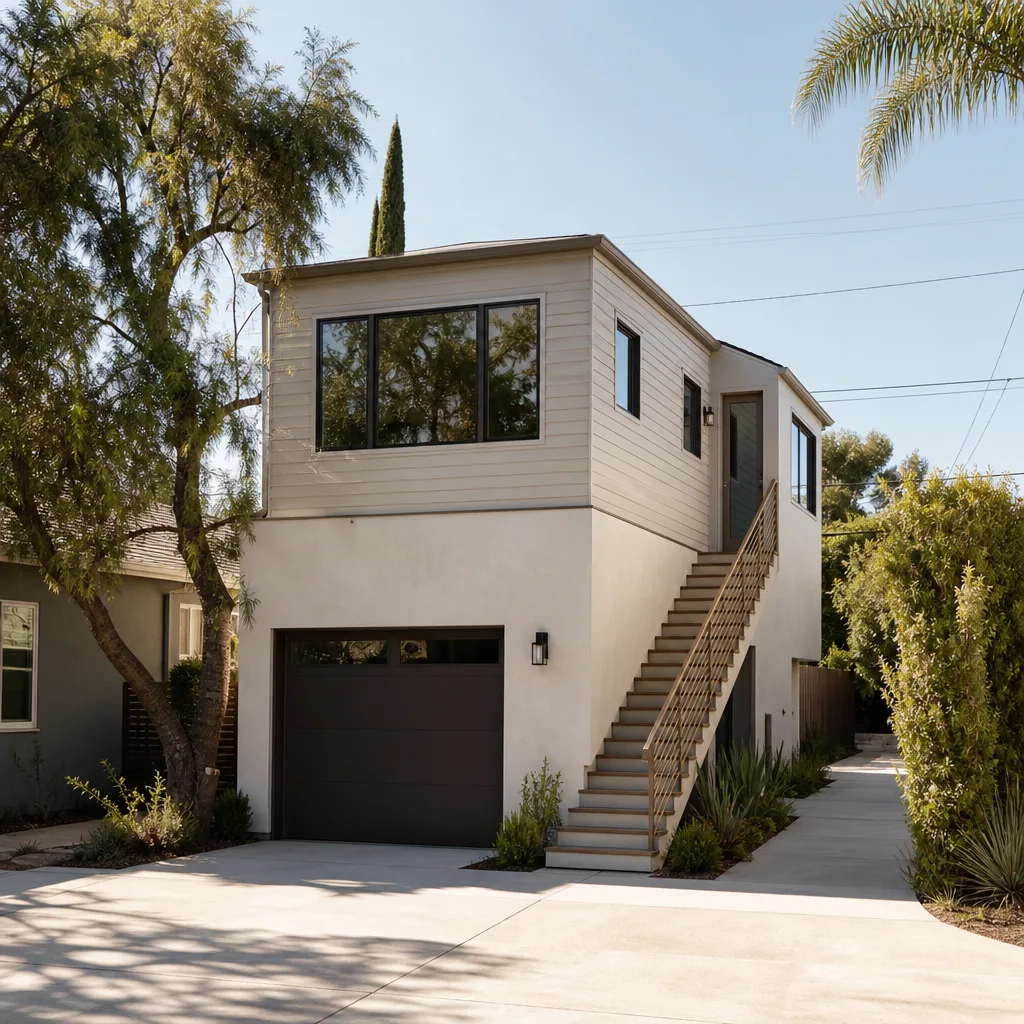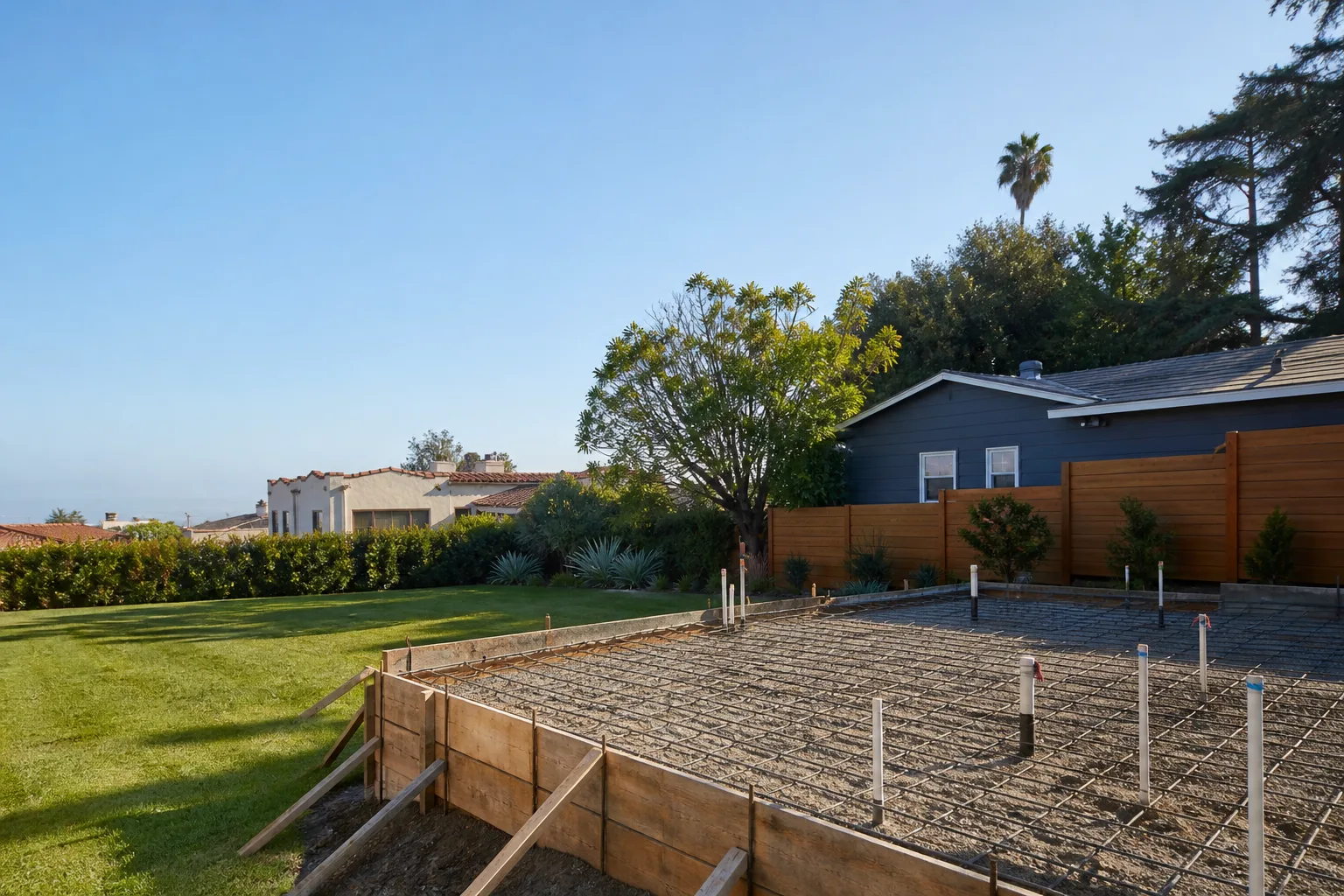

Cover Site Prep & Utilities: The Henderson Owner’s Guide
Site prep and utility work on a Cover ADU in Henderson runs roughly $8,500 – $22,000 installed, depending on trench length, panel capacity, and how much of your lot is already graded for drainage. We work with Cover units regularly and we do this work under a written price, permitted and inspected. Most Henderson owners find out something in this package has gone sideways when the unit is sitting on blocks with no power, the trench won’t pass inspection, or their electrician discovers the panel can’t carry another 60 amps.
Here’s the part nobody explains upfront: the “site prep and utilities package” isn’t one part. It’s a bundle of separate systems that have to be coordinated – grading and drainage, the foundation pad or pier system, the electrical service run and subpanel, water and sewer lateral connections, and gas if you’re running it. When one piece fails or the numbers don’t add up, the whole schedule stalls. That’s the situation most Henderson calls start with.
Key Takeaways
- Cover’s platform documentation specifies site requirements you can’t improvise – pad tolerance, drainage fall, and utility stub locations are all defined, and Clark County inspectors check them.
- Most failures we see in Henderson are electrical capacity (the existing panel is maxed) and drainage (the pad pitches toward the house, not away).
- Expect $8,500 – $22,000 for the full package, with panel upgrades and long trench runs as the two biggest cost drivers.
- We’re an independent contractor and not affiliated with Cover – we install to their published specs and we know the platform’s tolerances.
Which Cover Models This Applies To
Cover’s lineup – the one-bedroom, two-bedroom, and studio configurations – shares the same underlying site requirements, but the utility load differs by unit size. A studio can often run on a 60-amp subpanel; a two-bedroom with full kitchen, HVAC, and washer-dryer typically needs 100 amps or a service upgrade at the main panel. That difference alone can swing your electrical line item by $3,000 – $7,000 in Henderson.
To identify what your unit actually needs, start with the site plan and spec sheet that came with your Cover order – Cover provides a documented footprint, pad elevation requirements, and utility connection points. Measure your existing electrical panel’s bus rating (the sticker inside the door) and count open breaker slots before anyone quotes you a subpanel. If those documents are lost, we can work from the serial plate on the unit framing, but it costs you a site visit.
On OEM versus aftermarket: for the utility rough-in and site work, there’s no such thing as an “OEM part” in the way there is for, say, a window. What matters is meeting Cover’s published connection specs and Clark County’s code. We use standard code-compliant materials – copper or PEX water lines, Schedule 40 PVC or ABS drain lines, and appropriately rated conduit – and we don’t cut corners to save a few dollars on a buried line you’ll never see again.
Signs Your Cover Site Prep & Utilities Is Failing
Henderson’s soil and heat create specific failure patterns. Here’s what owners actually report, and what’s usually behind it.
- The panel trips when the unit’s HVAC kicks on. The subpanel was undersized or the load calculation was done by feel, not math. A two-bedroom unit pulling 100 amps on a 60-amp feed will trip every time the compressor cycles.
- Water pools near the pad after a monsoon storm. Grading or drainage fall wasn’t built to spec – in Henderson, where we can get an inch of rain in an hour, a pad pitched flat or toward the house becomes a foundation problem within a season or two.
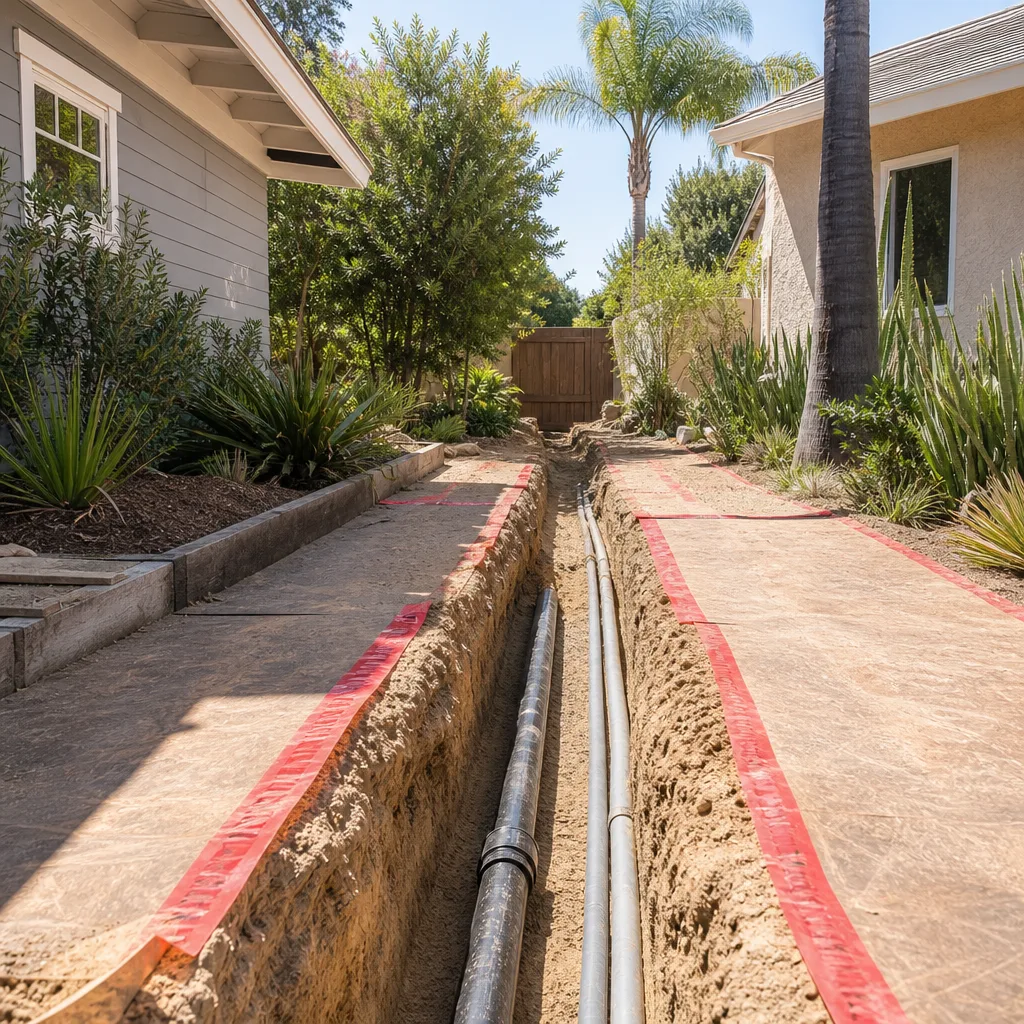
- The trench won’t pass inspection, or was never inspected. Buried conduit and water lines have to be inspected before backfill. If your contractor buried it without a call, the inspector can require you to re-expose the line.
- The unit sits with a visible gap under one corner. Pad or pier settlement, often from inadequate compaction on fill soil. This is fixable but it doesn’t fix itself.
- Sewer smell or slow drain in the unit. A lateral connection that wasn’t properly sloped (the code number is 1/4 inch per foot) or a vent that wasn’t tied in correctly. Both are code violations, not just nuisances.
Replacement Cost & What’s Included
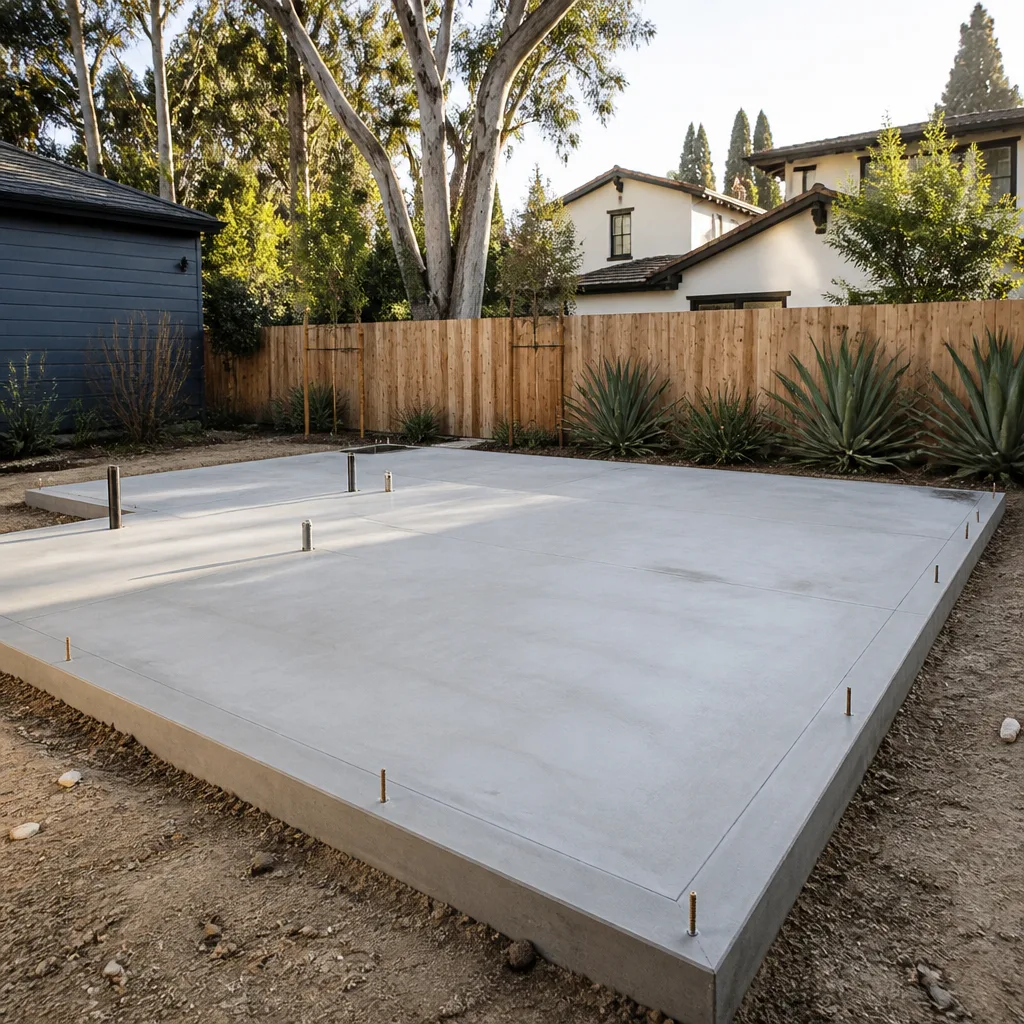
In Henderson, the full site prep and utilities package for a Cover unit typically breaks down like this:
| Line item | Installed range |
|---|---|
| Grading, drainage, and pad prep | $2,500 – $6,000 |
| Foundation pad or pier system | $2,000 – $5,500 |
| Electrical service run and subpanel (no panel upgrade) | $2,000 – $4,500 |
| Main panel upgrade if needed | $2,500 – $6,000 |
| Water and sewer lateral connections | $1,800 – $4,500 |
| Gas line if running gas | $800 – $2,000 |
Long trench runs across a large lot, hard caliche soil, and any need to cut and patch concrete or landscaping push the number up. We hand you the price in writing before any work starts, and the number on day one is the number on the final invoice. Permits and inspections are handled by us and included in the written scope unless the quote says otherwise. Workmanship on the site and utility installation is covered by our written one-year guarantee – if something we installed fails within that year, we come back and correct it at no charge.
DIY or Call Us?
You can safely check your panel’s bus rating and open breaker slots, confirm your lot’s grading and where water drains after a storm, and locate your existing utility stub-outs if they’re marked. Those are information-gathering steps.
The work itself – trenching, conduit, panel work, gas line, and sewer laterals – is not a DIY job in Nevada. Electrical service work requires a licensed electrician and permits, gas line work has real safety consequences, and a sewer lateral tied in wrong means digging it back up. We’ve seen Henderson homeowners try to save money on the electrical run and end up paying twice. Call (855) 953-5331 for a free estimate – we’ll look at what you have and tell you straight what it needs.
FAQs
The underground utilities should last the life of the structure if installed to code – copper and PEX water lines, properly sloped PVC drain lines, and rated conduit carry 50 years or more. The components that wear out sooner are the pad and drainage grade, which can shift with soil movement and heavy rain. In Henderson, we recommend checking pad level and drainage after each monsoon season.
Often yes. An undersized subpanel can sometimes be upgraded without redoing the whole service run, and a grading problem can be corrected without replacing the pad in many cases. A failed lateral or a buried line that didn’t get inspected usually does mean re-exposing and redoing that section. We’ll tell you which situation you’re in after we see it – call (855) 953-5331 for a free estimate.
Full site prep and utility installation typically runs two to four weeks, including inspection windows, depending on trench length, panel work, and weather. A single-component repair – a subpanel swap or regrading – is usually a few days. We’ll give you the timeline in writing with the price.
All materials are standard, code-compliant, and sourced through licensed local suppliers in the Henderson area. There’s no proprietary Cover part for utility rough-in – the requirement is meeting Cover’s published connection specs and passing Clark County inspection, which we do on every job. We also work regularly with Abodu and Dvele units if you’re comparing platforms.
Written by the team at Fielding ADU Builders Henderson, serving Henderson and nearby areas.